lunes, 21 de septiembre de 2015

September 21: The Roman poet Virgil died in 19 BC and went down in history for having created the poem "Aeneid".


Depiction of Virgil, 3rd century AD.

The Aeneid is an epic poem that tells the story of the Trojan Aeneas traveling to the peninsula where he becomes the ancestor of all Romans.


Virgil Reading the Aeneid to Augustus, Octavia, and Livia by Jean-Baptiste Wicar , Art Institute of Chicago.

Mythical hero Aeneas was a son of Aphrodite (Venus and Roman mythology) and Anchises. It was Hector's cousin who defended as far as he could his city Troy against the Greeks (See Iliad). Hector was son of Priam, king of Troy.


According to Homer, Aeneas did not like being subordinate to Hector. Although some writers judge him of treason, as seems to have been the leader of the Trojans who survived the Greek invasion.

According to mythology, Aeneas escaped and began a journey that led him to the land of Lazio (Italy today) where he finished as king and progenitor of the Roman people.


In 27 B.C.E., after Octavian was given the title of Augustus, the emperor exhorted Vergil to write about Rome under his rule. 

In accordance with the mythological story, the founders of Rome, Romulus and Remus, were descendants of Aeneas.

Virgil-Quotes


Aeneas fleeing Troy, was accompanied by all his family, but his wife died after falling behind and, later appeared as a ghost to tell him not suffering under the pressure over his death, because that was his destination, and Aeneas's destiny would be the father of a great nation: Rome.


Virgil-Quotes


domingo, 20 de septiembre de 2015

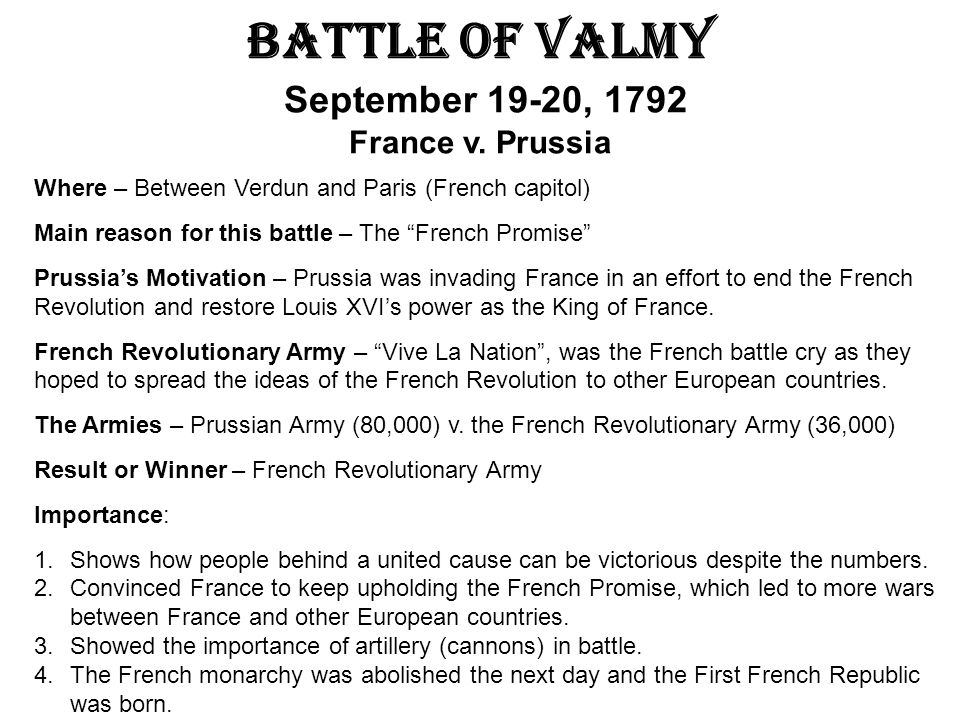
September 20: French troops manage to stop the alien invasion ally during the First Coalition War in 1792: "The Enigma of Valmy". First Coalition against France.


Painting of the battle of Valmy by Horac Vernet  from 1826. The white uniformed infantry to the right are regulars while the blue coated ranks to the left are from the citizen volunteers of 1791The Duke of Chartres (dismounted) and his brother, the Duke of Montpensier (on horseback), in dragoon uniform at the battle of Valmy.

European monarchies systematically opposed the French Revolution. In addition, the government of the United Kingdom of Great Britain did not accept the execution of Louis XVI; in fact Britain expelled the French ambassador, and so alarmed the rest of European monarchs.


The Duke of Chartres (dismounted) and his brother, the Duke of Montpensier (on horseback), in dragoon uniform at the battle of Valmy.


This raises the first composite Coalition against France, composed by Britain, Austria and Prussia against the French Revolution.

Prussian troops led by King Frederick William II of Prussia and the Duke of Brunswick cited French troops in the plain of Valmy.


On September 20, 1792, the united armies of Austria and Prussia met a crowd of poorly dressed and armed French boys committed to fight against the aristocratic armies of Austria and Prussia well armed, elegantly uniformed, accompanied by the best armed infantry in Europe.


Apparently so were some skirmishes by the courage of young French citizen-soldiers. Without official battle, 47,000 French boys attacked 35,000 soldiers of the allied forces of Austria and Prussia.

This was going to be a historic slaughter against France. However, French Generals Charles Dumouriez and François Kellermann sent emissaries to Paris speeding claiming victory, when the attack began

The largest and most important battle of the French Revolution was won by brave generals who stopped the alien invasion!


Charles William Ferdinand, Duke of Brunswick (Prussian commander)


The French anticipated the victory of the French Revolution. That news caused jubilation and the French revolutionaries felt glorious and proud.

Unofficial comments say that the Prussian Duke of Brunswick, who commanded the united armies against France, gave much despite seeing these French citizen-soldiers and singing what is now the Marseillaise. According to those comments, Brunswick declined to massacre those romantic French kids and decided to order the withdrawal.


Francois Kellermann, 1st Duke of Valmy and Victor of the Battle at Valmy (French commander)


This historic event is also known as "The Enigma of Valmy" or as "Phantom of Valmy".The question of exactly why the Prussians withdrew has never been definitively answered. To the surprise of nearly everyone, Brunswick broke off the action and retired from the field.

The veracity of the story of that war is questionable, but otherwise well. The foreign invasion had already captured Longwy and Verdun. The winner is the one who tells the story ...


sábado, 19 de septiembre de 2015

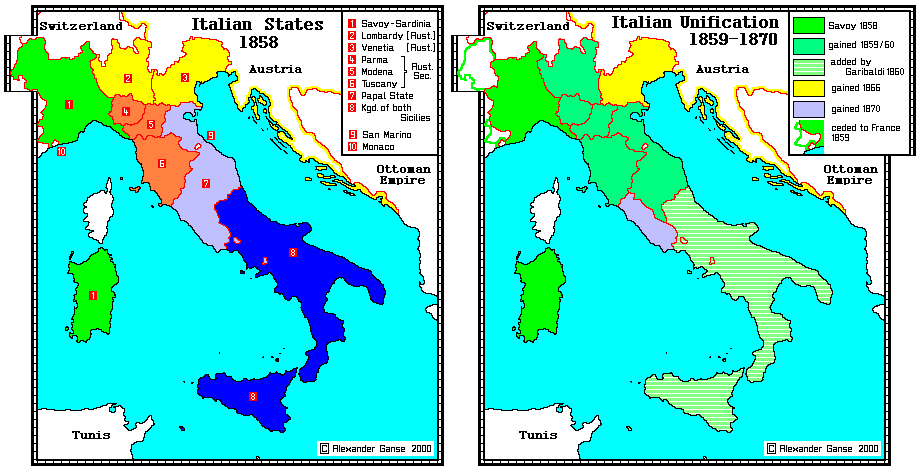
September 19: The Italian army under the command of General Raffaele Cadorna passed through the Aurelian Wall and besieged Rome on September 19, 1870: The capture of Rome and the Italian Unification.


General Raffaele Cadorna

During the unification of Italy, the Papal States occupied a fifth of the Italian peninsula, or downtown, including the city of Rome.


Drawing of the refufe Castel Gaeta of Pius IX from 1848-1850

The Popes did not allow the Italian unit unless it was done through them, and they would be the rulers.

Fathers of Italy.


Pope Pius IX would not accept any formula of conciliation, with Vittorio Emmanuel II, who was already being recognized as the monarch who led the unification of Italy along with Giuseppe Mazzini (The soul of unification), Giuseppe Garibaldi (the sword unification) and Camilo Benzo, Count of Cavour (the brain of unification).


Pope Pius IX declared himself a prisoner of the Vatican. The capture of Rome ended the ancient papal monarchy over Rome and central Italy. Over the next 59 years, the popes refused to leave the Vatican, and even the Piazza de San Petro, as a rejection of the new Italian authority king Victor Emmanuel II of Italy.


Pontifical Theocracy on the Papal States was reduced to the Vatican which still retains its political independence as a sovereign state.


King Victor Emmanuel of Piedmont-Sardinia became king on March 24, 1849 and from there led the unification of Italy with his minister Camilo Benzo, Count of Cavour, and with the collaboration of Mazzini and Garibaldi.


Thus, the Kingdom of Piedmont grew to include all of Italy, in a process of 10 years between 1860 and 1870.


Victor Emmanuel meets Garibaldi near Teano.


viernes, 18 de septiembre de 2015

September 18: Today is the anniversary of the Treaty of Belgrade, signed on September 18, 1739, between the Kingdom of Serbia, which belonged to Archduchy of Austria and the Habsburg dynasty, on one side, and the Turkish-Ottoman Empire, which had been expanding from the Middle East and North Africa, on the other side.


Russian campaign 1736.

This treaty ended two years hostilities of the so-called Austro-Turkish War, between 1737 and 1739. The Imperial Russia joined the Austrians to fight the Ottoman Turkish expansion in Europe, as shown in the maps below. In addition, the Russians signed the Treaty of Niš, which allowed the Russians access to the Black Sea, where they began to build the port of Azov.


The Habsburg dynasty had to give Serb territories, with its capital Belgrade, southern Banat of Temeswar and northern Bosnia, the Ottoman Turks.


Political situation in 1739, after Treaty of Belgrade.


Therefore, the Treaty of Belgrade ended with the Kingdom of Serbia, which had existed since 1718.


Austrian victories at Petrovaradin (Peterwardein) (August 1716), Temesvár (October 1716), and Belgrade (August 1717) led to the greatest expansion of Austrian power in Southeast Europe.  Austrian power reached to the Banat of Temesvár (the last important Ottoman stronghold in Hungary), Belgrade and parts of northern Serbia, northern Bosnia, and Lesser Wallachia (Oltenia).  However, Austria would lose northern Bosnia, Habsburg Serbia (including Belgrade), and the southern parts of the Banat of  Temesvár and Lesser Wallachia in the Peace of Belgrade (1739) that ended the Austro-Turkish War of 1737-1739. Dr William Young, University of North Dakota.

Thus, the Serbs would have to wait another war between the Holy Roman Empire and the Turkish-Ottoman Empire, in 1788, to free culture Turkish and Turkish onerous taxation.


jueves, 17 de septiembre de 2015

September 17: The Camp David Accords were signed by Egypt and Israel in 1978, in the presence of the then US President Jimmy Carter.


Anwar el- Sadat, Jimmy Carter and Menachem Begin at Camp David, 1978.

After 13 days of secret negotiations at the military fortress and retreat house of the president of the United States, an agreement was reached.


A meeting at Camp David with (l-r) Aharon Barak, Menachem Begin, Anwar Sadat, and Ezer Weizman, 1978.


Anwar El Sadat, President of Egypt, and Israeli Prime Minister Menachem Begin, signed two framework agreements in the Oval Office of the White House, attended as witnessed by President Jimmy Carter. Previously, both Middle-East leaders signed the Camp David Accords, on 17 September 1978.


President Carter, National Security Advisor Zbigniew Brzezinski, and Secretary of State Cyrus Vance at Camp David.

Anwar Sadat and Menachem Begin received both the Nobel Peace Prize of 1978, Due to agreements, a year before signing the real peace treaty. The first frame (Framework for Peace in the Middle East), dealt with the Palestinian territories; but was an agreement without Palestinian participation and therefore was not accepted by the United Nations.


Begin and Brzezinski playing chess at Camp David.

The second of these frames (a frame for the conclusion of a peace treaty between Egypt and Israel) led directly to the Treaty of Peace between Egypt and Israel in 1979.


Egyptian President Anwar Sadat, left, US President Jimmy Carter, center, and Prime Minister Menachem Begin clasp hands on the North Lawn of the White House ...

Subsequent consequences were disastrous: On October 6, 1981 The President Anwar Sadat was assassinated by members of Egyptian Islamic Jihad during the annual victory parade in Cairo commemorating the Egyptian Suez Canal recovery.


miércoles, 16 de septiembre de 2015

September 16: The Montreal Protocol is signed in 1987, in order to protect the ozone layer in the stratosphere and avoid retrenchments: The Montreal Protocol on Substances that Deplete the Ozone Layer.


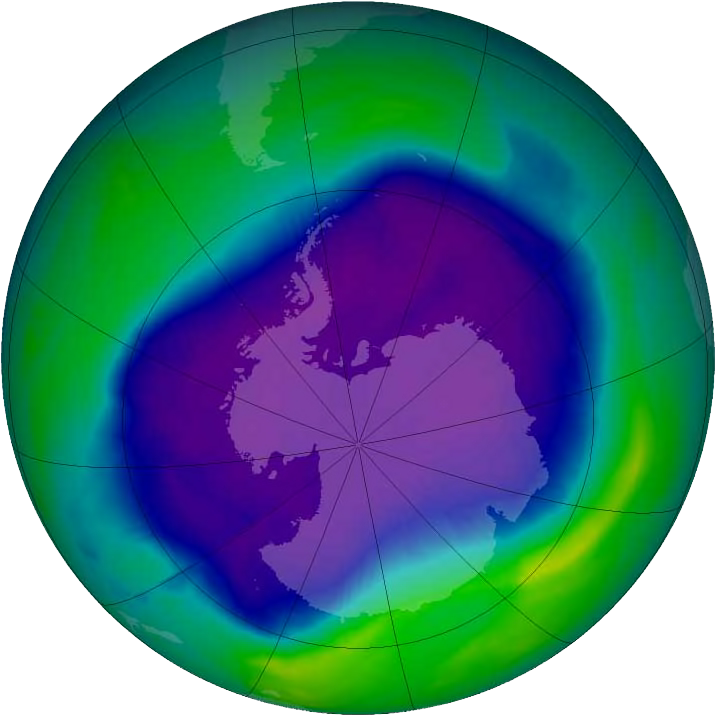
The largest Antarctic ozone hole recorded as of September 2006. http://www.nasa.gov/vision/earth/lookingatearth/ozone_record.html


The United Nations agency for environmental protection is known by its acronym UNEP (United Nations Environmental Programme) which formalized an international agreement on substances that deplete the protective ozone layer of the Earth.


Since 1987 science has advanced considerably and we are learning that the Protocol is even more important than its designers realized back in the mid 1980s.

Protocols differ from those treaties which are agreements of wills. While treaties are agreements between subjects of international law, mainly between States and between international organizations and whose duties should become law within each State which signs it.


The Montreal Protocol was designed to reduce the production and consumption of chemicals that deplete the ozone layer. The protocol was signed on September 16, 1987, and it entered into force on 1 January 1989.


Chlorofluorocarbons (CFCs or CLFC) are gaseous substances derived from the exploitation of hydrocarbons that when mixed with sunlight hydrogen atoms replaced by atoms of chlorine and fluorine. In the 70s, two US chemical engineers, F. Sherwood Roland and Mario Molina theorized the effects of CFCs. His theories were validated in 1985 when it was shown that there was a "hole" in the ozone layer in the stratosphere of the Antarctic.


The Montreal Protocol on Substances that Deplete the Ozone Layer and the Kyoto Protocol have been ratified by 197 parties, which includes 196 states and the European Union, making them the first universally ratified treaties in United Nations History.


martes, 15 de septiembre de 2015

September 15: Guatemala, El Salvador, Honduras, Nicaragua, and Costa Rica jointly declared their independence from Spain in 1821.


The five countries of the former Captaincy General eventually formed the Federal Republic of Central America in 1821.


On September 15, 1821, the Captaincy General of Guatemala which was made by Costa Rica, Chiapas, Guatemala, El Salvador, Honduras and Nicaragua, proclaimed its independence from Spain officially.


A painting by Chilean painter Luis Vergara Ahumada, depicting the signing of the Act by Father José Matías Delgado.


The Act of Independence of Central America is a legal document by which the Province of Guatemala proclaimed its independence from the Spanish Empire.


The existence of the United Provinces of Central America was formed as Lander born on July 1, 1823 and ended on 22 November 1824. All these territories belonged to the Captaincy General of Guatemala, part of the Spanish Empire and under the Viceroyalty of New Spain (today Mexico).


In proclaiming their independence, they became part of the First Empire of Mexico. After Mexican Emperor Agustin Iturbide´s abdication in 1823, Central America jointly formed a Federation of its own.